UMass hockey: Minutemen lose O'Hara, Suniev early to NHL deals
 Guest columnist Emily Quintana, Kate Kruckemeyer, and Stephanie Baird: Fighting ICE attack on principle of sanctuary
 Local proponents of medical aid in dying hopeful long-discussed legislation may finally pass
 Warren forms ‘war room’ as Dems defend Social Security
 Agreement clears way for Amherst to apply for federal grants, sign general contractor for Jones project
 Literacy Project celebrating 40 years of education
 Area briefs: Concert to benefit Transhealth; Energy fund taking applications; Northampton Elks donate to VA pantry; Mount Holyoke will celebrate alum Converse
 Around the Hamptons: Four candidates advance for Easthampton police chief
 Having adapted over time, Whately Grange celebrating 85 years

Will early start on Beacon Hill bode well for aid-in-dying bill?
BOSTON — Most legislative committees are still getting organized and have not yet held their first hearing of the new two-year session. But for House members of the Committee on Public Health, the clock is already ticking on one of the most controversial matters that perennially comes before them.

Sabadosa, Velis push for state endometriosis task force to raise awareness about little-known illness
BOSTON — For a condition that affects 11%, or approximately one in 10 of reproductive age-women, endometriosis is on hardly anyone’s radar, including medical professionals.
Most Read
 Nearly all of South Hadley High’s student body holds ‘walkout to walk-in’ rally to oppose cuts, call for funding reform
 Northampton schools probe staff response to student’s unfulfilled IEP
 UMass basketball: Minutemen land Florida Tech transfer Donovan Brown
 UMass Chancellor Reyes outlines changes amid financial uncertainty under Trump administration
 Northampton Housing Authority boss placed on leave
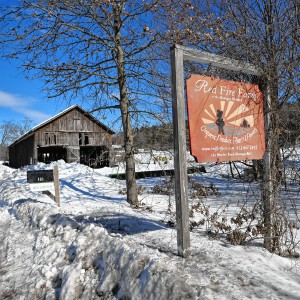 Four Red Fire Farm workers arrested as part of ICE operation in Springfield
Editors Picks
 A Look Back, April 3
 Photo: Hickory Ridge clubhouse a thing of the past
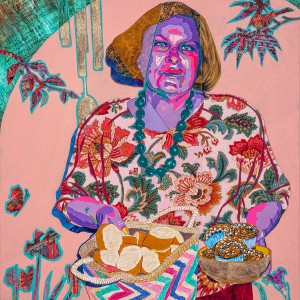 Arts Briefs: Power of Truths Fest in Florence, dance at Smith, jazz at UMass, and more
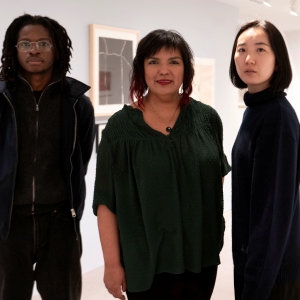 ‘Art in the Age of Human Impact’: New exhibition at UMass explores complex relationship between humans and nature
Sports
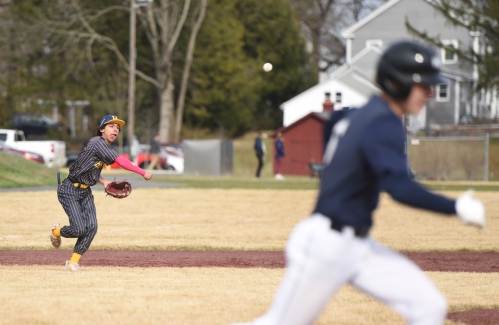
HS Roundup: Frontier baseball blanks Hopkins, 5-0, improves to 3-0 this season (PHOTOS)
Make it three wins in a row to open the season for the Frontier baseball team.
 Amherst’s Ryan Leonard makes NHL debut for Washington Capitals in 4-3 win over Bruins in Boston
 UMass basketball: Akil Watson, Marqui Worthy join group of Minutemen entering transfer portal
 UMass hockey: Carvel reflects on Minutemen’s successful 2024-25 season
 UMass basketball coach Frank Martin reflects on disappointing season: ‘I obviously didn’t do a very good job doing my job’
Opinion

Carolyn Cushing: Stop perpetuating dehumanization
I have read Hannah Moushabeck’s children’s book “Homeland: My Father Dreams of Palestine.” It’s lovely: a story of a father sharing memories and stories with his three daughters about his family and the sights and sounds of East Jerusalem growing up.
 Laurel Gardner: Are ADUs for residential housing or for profit?
 Ava Gips: Join national day of protest on April 5
 Aline LaBorwit Davis: Headlines ‘biased and negative’
 E. Lary Grossman: Vote to remove housing authority board member ‘foolish’

Your Daily Puzzles

An approachable redesign to a classic. Explore our "hints."

A quick daily flip. Finally, someone cracked the code on digital jigsaw puzzles.

Chess but with chaos: Every day is a unique, wacky board.

Word search but as a strategy game. Clearing the board feels really good.

Align the letters in just the right way to spell a word. And then more words.
Business
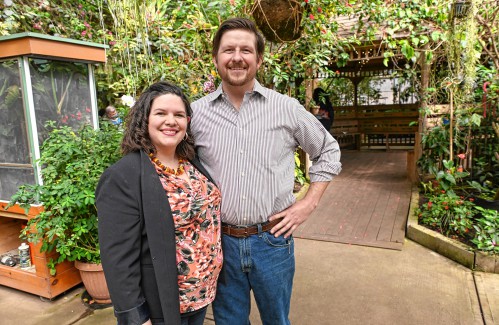
Hopeful buyers emerge for Magic Wings butterfly conservatory in South Deerfield
SOUTH DEERFIELD — One of the prospective owners of Magic Wings often thinks back to fond memories of celebrating a life milestone at the nearly quarter-century-old butterfly conservatory and gardens on Routes 5 and 10.
 Consumer Corner with Anita Wilson: Spam texts a growing threat to consumers
 Spreading the Mexican spice: After five years in Florence, Masa Mexicano spreads its wings with second location in Belchertown
  Area property deed transfers, March 28
 Making News in Business, March 28
e-Edition
Arts & Life

Speaking of Nature: Stinky signs of spring: Skunk cabbage is eye candy after months of winter landscape
March Madness is a term that has been assigned to the sport of college basketball. The idea is that a huge tournament creates a frenzied “madness” of athletic exuberance as different teams from across the country compete in a clash of collegiate contenders to see who will be crowned as champion. There are brackets, debates and wagers involved and everyone seems to have a good time.
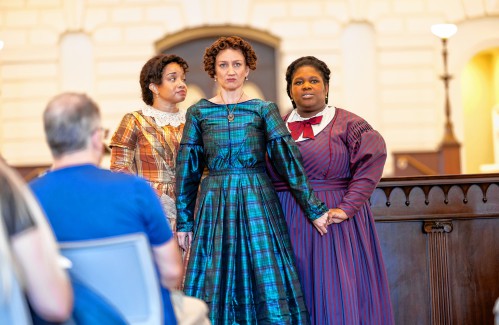 Historic speech echoes two centuries later: ‘A Light Under the Dome’ recalls the first American woman to speak to a legislative body
 ‘His notes will linger forever’: Remembering Young@Heart accordionist and Springfield College professor Chris Haynes
 Valley Bounty: And on that farm she had a bit of everything: Little Brook Farm in Sunderland is a labor of love for farmer Kristen Whittle
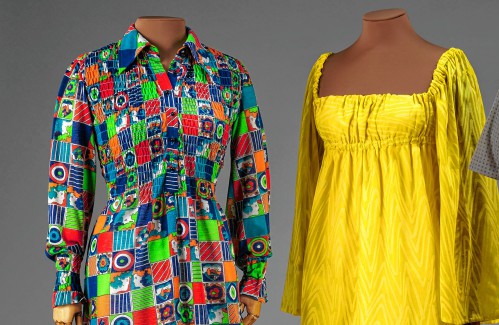 Women’s history told through clothing: Shelburne Falls Area Women’s Club to host ‘Real Clothes, Real Lives: 200 Years of What Women Wore’ author, April 9
Obituaries
 Margaret L. Tudryn
Hadley, MA - Margaret (Peg) L. Tudryn, 88 of Hadley, passed away on March 29, 2025. She was born on August 1, 1936, the daughter of the late Edward W. and Josephine A. (Toole) Tudryn. Peg graduated from Hopkins Academy in 1954 and Smith... remainder of obit for Margaret L. Tudryn
 Corliss M. Elizabeth
Amherst, MA - Corliss Elizabeth passed away on March 27, 2025. She was born May 23, 1949 in Waterbury, CT, the only child of Frank and Grace (Kellner) Gross, and granddaughter of Henry and May (Broderick) Kellner, Waterbury, CT and Fran... remainder of obit for Corliss M. Elizabeth
 Russell Newton
Keene, NH - Russell F. Newton, 81, of Keene NH, formerly of Northfield, MA, passed away on March 31, 2025, at Langdon Place of Keene. He was born in Greenfield, MA on December 2, 1943, the son of Wallace F. and Estelle J. (Foster) Newto... remainder of obit for Russell Newton
 Deborah Ann Banas
Easthampton, MA - Deborah Ann Banas, a beloved wife, mother, grandmother, sister, aunt and friend, passed away peacefully in her home on March 8, 2025, at the age of 71 in Easthampton, MA. Born on October 24, 1953, in Holyoke, MA. D... remainder of obit for Deborah Ann Banas