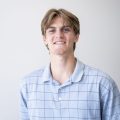
There are few people considered among the world’s top “thinkers, innovators and creators,” and five of them happen to call the Pioneer Valley home.
That’s according to the century-old Guggenheim Foundation, which annually recognizes exceptional achievement in the arts, sciences and humanities through its prestigious fellowship program.
This year’s 101st class of Guggenheim Fellows includes five educators with ties to the Valley: Smith College lecturer Pamela Petro; University of Massachusetts Amherst professors Juana Valdés, an artist, and Stephen Platt, who specializes in Asian Studies; and Amherst College professors Lawrence Douglas, who teaches law, and Sonya Clark, who teaches fine arts.
“It literally changed my life,” said Petro following the April announcement. “It opened up possibilities that I didn’t know existed.”

The fellowship honors hundreds of writers, artists and creators each year through the Guggenheim Foundation, founded in 1925 and named after former U.S. Sen. Simon Guggenheim. There are 223 fellows in this year’s class located across North America from the Caribbean to Canada.
“Our new class of Guggenheim Fellows is representative of the world’s best thinkers, innovators, and creators in art, science, and scholarship,” Edward Hirsch, president of the Guggenheim Foundation, said in a statement. “We are honored to support their visionary contributions.”
The “possibilities” that opened for Petro, a Northampton resident who also lectures at Lesley University, are what the fellowship grants — each recipient gets funding to pursue a project outlined in their application.
Petro plans to travel the world — visiting Poland, Argentina and Hawaii — to study ghosts in a literal and metaphorical sense. She said ghosts represent a presence where there is absence of people, as explored in one of her previous books, but she hopes to explore that concept with geographical locations.
“(Ghosts) have that sense of absence. That’s something that not only we have in our own lives but it can also be geographic and we just don’t think about,” Petro said.
A review panel of various professionals, including past fellows, reviews and selects submissions. Along with describing a project they would like to pursue, applicants provide a start-to-present career narrative, and are then designated to specific categories based on their studies. This year, fellows span across 55 different disciplines with a total of nearly 5,000 applicants.

Douglas, awarded in the law category, plans to write a book about al-Qaida lieutenant Abd al-Nashiri, who is alleged to have organized the bombing of the USS Cole in Yemen in 2000.
Douglas said the bombing was the largest terrorist attack against the United States before those on Sept. 11, 2001, and he first wrote about the topic in 2013 when al-Nashiri was supposed to go to trial. Thirteen years later, al-Nashiri is now expected to go to trial this year and Douglas will use the time afforded by the fellowship to write about the proceedings.
“It’s an incredible opportunity,” Douglas said. “When you teach at a liberal arts college like Amherst, I find it exceptionally difficult to get writing done during the semester … Without this type of fellowship support, I would have found it difficult to be the kind of scholar I want to be.”

Clark, a professor of art and art history at Amherst College, will continue many projects exploring the symbolism of marigolds, inspired by her studies of author Toni Morrison’s “The Bluest Eye.” Her work will result in two shows in 2028 at the Mint Museum in Charlotte, North Carolina, and the Isabella Stewart Gardner Museum in Boston. One of Clark’s projects includes a circular marigold painting, created from a yellow paint Clark made by submerging marigold dust in acrylic.
Clark described the novel as a tragic story about three Black girls — two sisters and a friend who is persecuted for not fitting white beauty standards. The sisters try to help her, at one point planting marigolds on her behalf, but the flowers never grow. For Clark, the story reflects the need for people to come together and help one another grow — something she sees as especially necessary right now.
“I see this as a really important message from Toni Morrison as a call to all of us that these three girls are trying to step up for each other,” Clark said.
Platt, who grew up in Northampton and is part of the Asian studies category, said the fellowship is a major honor because judges evaluate the applicants’ entire careers.”

“It’s a huge and unexpected honor,” Platt said. “It’s a confirmation from people in your field that the work you do has value.”
As a historian of China, Platt will take a year off from his teaching duties at UMass to continue working on two projects, one exploring children’s lives in an internment camp in China during World War II. Platt said at a time when funding for the humanities is declining, the fellowship is crucial for him and others.
“I’m a historian of China and in the past I’ve gotten funding for national humanities,” Platt said. “I think especially in the current moment and the current climate, funding is hard (to come by).”
Since its founding, the foundation has awarded nearly $450 million in fellowships to more than 19,000 applicants. This year, applications in the Creative Arts and Humanities were up by 50% and applications in the Sciences were up by 86%, according to the foundation.

Valdés, an associate art professor at UMass, is a fellow in the Fine Arts category and will use the fellowship to create a documentary video exploring her mother’s migration from Cuba to the United States. Her mother traveled with Valdés and her three siblings in 1971, later opening her own clothing manufacturing business.
“I feel like it’s a really good point in time to revisit the people — especially people of color in Cuba at that time — and their decision to move to the United States,” Valdés said. “Hopefully it will give us a better understanding of the history we have in common.”